
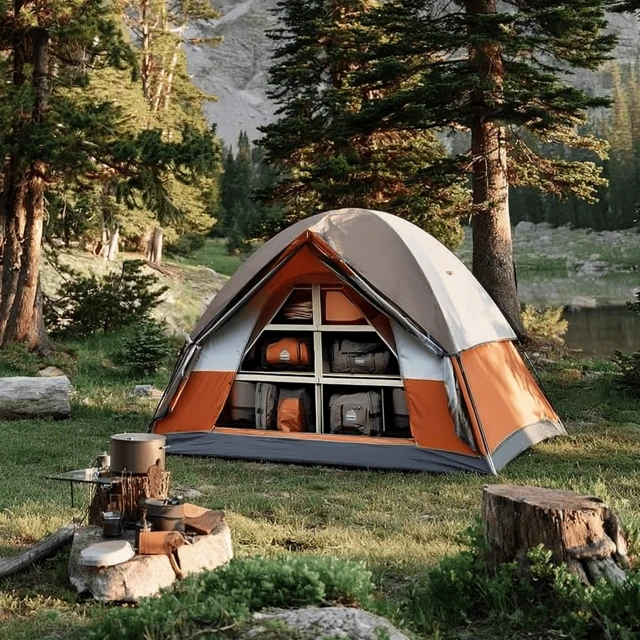
Rain patters on the fly. Somewhere inside the tent, a flashlight rolls under a sleeping bag. Someone else is sitting on the one dry pair of socks. If this sounds familiar, you don’t need more gear—you need a system.

Family tent camping organization isn’t about being tidy for its own sake. It’s about reducing friction. When every item has a home, you spend less time hunting and more time actually camping. The trick is to create zones before you leave the driveway, not after the chaos sets in.
The Zone System: A Place for Everything
Think of your tent as a small house with three rooms: sleep, dress, and store. The central aisle stays clear. Always. That’s the highway of your tent, and blocking it with a duffel is like parking a car in your hallway.
Sleep Zone
This is the back half of the tent. Sleeping pads and bags go here, and nothing else. No backpacks, no shoes, no food wrappers. Each sleeping bag gets a dedicated stuff sack that lives outside the bag during the day, used as a pillow case or clothes holder at night. A small mesh pocket near each head can hold a headlamp, earplugs, and a water bottle. I use the kind of pockets that clip onto tent poles—no drilling, no sticky hooks.
Dress Zone
Just inside the door, on one side, set up a low bin for each family member. A 13-quart clear plastic bin works for a child, 18-quart for an adult. Label them with a permanent marker or colored tape. Inside: one full change of clothes, pajamas, and a spare pair of socks. That’s it. The rest of the clothing stays in the car or in a larger bin under the vestibule. When someone needs dry pants, they know exactly where to look. No digging through a shared duffel.
Store Zone
The opposite side of the door holds community gear: first aid kit, sunscreen, bug spray, a small lantern, and a repair kit. Use a hanging organizer with clear pockets. I prefer the kind that hangs from the tent’s ceiling loop—it keeps weight off the poles and keeps items visible. A single carabiner on a loop holds a small trash bag. This is not the place for food or scented items. That stays outside.
Kitchen Organization Outside the Tent
The tent is for sleeping and dressing. The kitchen lives under a tarp or in a screened shelter. I pack a single tote for cooking gear: one stove, one fuel canister, one pot, one pan, a spatula, a spoon, a cutting board, and a small knife. That’s it. A second tote holds dry food in sealed containers. A third holds plates, cups, and utensils. The totes stack inside each other when empty. A folding table or a flat rock becomes the prep surface. Clean as you go. A bucket of warm water and a drop of biodegradable soap handles dishes immediately after eating. Dirty dishes left overnight attract raccoons and morning regret.
Common mistake: bringing too many gadgets. A family of four does not need a French press, a griddle, and a Dutch oven for a weekend trip. One pot meals—chili, pasta, one-pan eggs and potatoes—keep the kitchen simple and the cleanup faster.
Rain and Mud: The Wet Zone
Rain changes everything. The moment someone steps inside with wet shoes, the floor becomes a swamp. Solution: a dedicated wet zone just inside the door. A small waterproof mat (a rubber car floor mat works perfectly) catches mud. A low bin holds wet shoes. A clothesline strung under the vestibule holds wet jackets and towels. Never bring wet gear into the sleep zone. If the vestibule is too small, rig a tarp over the tent entrance. Dry socks stay in a sealed bin until worn.
For heavy rain, I keep a small microfiber towel clipped to the tent loop. One quick wipe of hands and face before entering keeps moisture from spreading. Kids learn this routine after one soggy night.
Wind and Sand: The Secure Zone
Wind at the beach or in open meadows turns organization into a game of catch. Lightweight items fly away. Sand gets everywhere. The fix: everything in a bin or a zippered bag. No loose items on the tent floor. Stake down the tent properly—every loop, every corner, even if the forecast says calm. A gust at 3 a.m. will test your setup. Use extra guylines on the windward side. Store shoes in a mesh bag hung from a pole. Sand falls through, not into your sleeping bag.
Nighttime: The Dark Zone
Midnight bathroom runs are inevitable with kids. Mark the tent zipper pull with a glow-in-the-dark tab or a piece of reflective tape. Keep a headlamp on each person’s wrist or around their neck. A small LED lantern on low setting in the store zone provides enough light to find a water bottle without waking everyone. Practice the routine at home: unzip, step out, zip up. It saves cold drafts and lost sleep.
Takeaway
Family tent camping organization comes down to three rules: zones, containers, and routines. Set up the zones before you need them. Use bins and hooks to keep everything off the floor. Teach everyone where things go. The result is less chaos, more campfire time, and maybe—just maybe—a flashlight that stays where you left it.
Frequently Asked Questions
What is the best way to organize a family tent for camping?
The zone system works best: designate areas for sleeping, dressing, gear storage, and a clear central walkway. Use color-coded bins and hanging organizers to keep everything off the floor and easy to find.
How do you keep a tent organized with multiple kids?
Assign each child a single bin or duffel for their clothes and personal items. Use mesh pockets on tent walls for small essentials. Establish a rule that shoes stay at the door and snacks stay in the designated kitchen zone outside.
What should I pack for family tent camping organization?
Key items include clear plastic bins (labeled), collapsible hanging organizers, a doormat, headlamps for each person, and a dedicated kitchen tote. Packing cubes for clothes also help keep things tidy.
How do you organize a tent for rainy weather?
Create a wet-dry transition zone just inside the tent door with a waterproof mat and a bin for wet gear. Keep all dry clothing in sealed bins or dry bags. Hang wet items from a clothesline under the vestibule, never inside the sleeping area.