
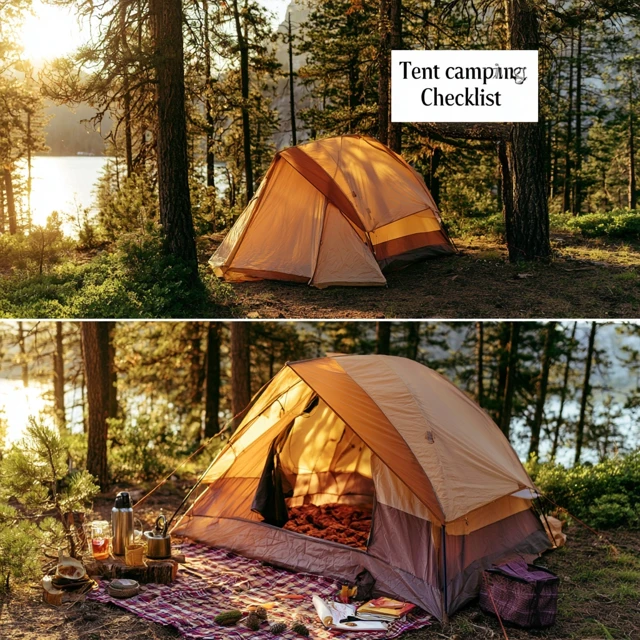
The smell of damp canvas. The rustle of nylon being shaken out. That first deep breath of pine-scented air when you unzip the tent door. A well-packed car means you get to that moment faster and with less stress. But a simple tent camping checklist isn’t just about remembering the tent and the sleeping bag. It’s about the order you pack and the small details that turn a good trip into a great one.

I’ve been refining my own list for years, and I’ve learned that the trick isn’t to bring everything—it’s to bring the right things and pack them so you can find them. Here’s my approach, with a specific angle most checklists miss: a packing sequence that saves time and prevents mid-trip frustration.
The Core Shelter System: Pitch First, Pack Last
Your tent is the center of camp. But the common mistake is to bury it under everything else. Instead, pack your tent last—on top of all other gear. When you arrive, you can grab it first and set up shelter before unloading the rest. This is critical if rain is threatening or if you’re arriving after dark.
What goes in the tent bag:
- Tent body and rainfly (always packed together)
- Poles (check that shock cord isn’t slack—if it is, replace the cord before you go)
- Stakes (count them before every trip; I keep a spare set of 8 in my repair kit)
- Ground cloth or footprint (cut to fit just under the tent floor, not sticking out—if it extends beyond, it channels rainwater underneath)
- Guyline cord (pre-cut in 6-foot lengths with tensioners attached)
Why this works: By having the tent accessible, you can pitch it immediately. Then you have a clean, dry base to organize everything else. If you’re camping with kids, have them help with the stakes while you handle the poles—it keeps them engaged and gives you a hand.
Sleep System: Comfort Is Non-Negotiable
A bad night’s sleep ruins a trip. Your sleep system needs three components: insulation from the ground (sleeping pad), warmth (sleeping bag or quilt), and head support (a real pillow, not a stuff sack).
Packing tip: Don’t compress your sleeping bag into its stuff sack days before the trip. Keep it loose in a large cotton or mesh bag until you load the car. This preserves loft. I use a large dry bag for my sleeping bag and pad together—it doubles as a waterproof emergency bag if needed.
Common mistake: Sleeping bag temperature ratings are survival ratings, not comfort ratings. If the low is 40°F, bring a bag rated to 20°F. Or add a liner (fleece or silk) for an extra 10-15 degrees. For cold-weather camping, a closed-cell foam pad under your inflatable pad adds R-value and protects against punctures.
Kitchen and Food: The Zone System
A camp kitchen is a small, organized area. I use a single tote bin for everything food-related. Inside, I have three pouches: one for cooking tools (stove, fuel, lighter, pot gripper), one for eating (bowl, cup, utensil, spork per person), and one for cleanup (biodegradable soap, sponge, small towel, trash bags).
Safety note: Never cook inside your tent. Carbon monoxide from stoves and lanterns is odorless and deadly. Set up your kitchen at least 10 feet from the tent entrance, on a level, non-flammable surface. In bear country, store all food, trash, and scented items in a bear canister or hang them 10 feet up and 4 feet from the tree trunk—check local regulations.
Water: Bring at least 1 gallon per person per day. More if you’re hiking or it’s hot. A collapsible 5-gallon container is worth its weight in convenience. For filtering, a lightweight pump or squeeze filter works for streams, but always treat or boil if you’re unsure.
Clothing and Layers: The Three-Bag System
Instead of a jumbled duffel, I use three stuff sacks: one for daytime clothes, one for sleep clothes (kept clean and dry), and one for rain gear and insulation. This makes it easy to grab what you need without dumping everything.
What to bring:
- Base layer (wool or synthetic, not cotton—cotton kills when wet)
- Mid layer (fleece or puffy jacket)
- Outer shell (waterproof and breathable rain jacket and pants)
- Extra socks (two pairs per day—one for hiking, one for camp)
- Hat and gloves (even in summer, nights can be chilly)
- Camp shoes (lightweight sandals or slip-ons)
For wet weather: Pack a small dry bag for wet clothes. Hang wet items on a clothesline strung between trees (use a lightweight cord and carabiners). Never put wet gear inside your sleeping bag—it will steal warmth.
Lighting and Navigation: Red Light for Sleep
A headlamp per person is non-negotiable. Bring a spare set of batteries. I also carry a small LED lantern for the tent—it’s softer on the eyes and creates a cozy glow. For reading or late-night card games, a red light mode preserves night vision and doesn’t disturb others.
Navigation: A physical map of the area and a compass. Phones die, batteries drain in cold weather. Know how to read a map before you go. For car camping, a simple GPS or downloaded offline maps on your phone is fine—but always have a backup.
Safety and Repair: The Small Things That Save a Trip
A tiny repair kit fits in a mint tin. Inside: a needle and heavy thread, a 4-inch square of tent repair tape (tenacious tape works on nylon and polyester), a multi-tool, a lighter, a few safety pins, and a small tube of super glue. This has fixed a broken pole sleeve, a ripped screen, and a snapped guylines more times than I can count.
First aid: A basic kit with bandages, antiseptic wipes, pain reliever, blister treatment (moleskin), and any personal medications. Add an emergency blanket (the thin foil kind) and a whistle.
Fire safety: If you plan a campfire, keep a bucket of water and a shovel nearby. Never leave a fire unattended. Douse it thoroughly before bed—stir the ashes, add more water, stir again. The ashes should be cool to the touch.
Final Walk-Through: The Trick That Catches Everything
Here’s the specific trick I promised. Before you zip your car doors, do a 60-second walk-around. Pretend you’re setting up camp: unload the tent, pitch it, unroll your sleeping bag, set up the stove, make a cup of coffee. This mental rehearsal catches missing items every time. Did you imagine lighting the stove? Did you have fuel? Did you picture staking the tent? Did you have enough stakes?
This simple mental check has saved me from forgetting my stove fuel, my tent poles (yes, really), and my pillow. It takes less than a minute and costs nothing.
Takeaway: Pack Smart, Not Heavy
A simple tent camping checklist is about reducing friction. Pack your tent on top. Keep your sleep system loose. Organize your kitchen in zones. Do the walk-through. When you arrive, you’ll set up in 15 minutes flat, and you’ll spend the rest of your time enjoying the sound of the wind in the trees and the warmth of a well-earned camp meal.
Frequently Asked Questions
What is the most important thing to pack for a simple tent camping trip?
The tent itself, plus a way to secure it (stakes, guylines) and a ground cloth. After that, a sleep system (sleeping bag, pad, pillow) and a reliable light source (headlamp or lantern) are non-negotiable.
How can I avoid forgetting something important?
Use a checklist organized by category (shelter, sleep, kitchen, clothing, safety). Pack in the same order every time. I also do a ‘final walk-through’ where I pretend to set up camp in my living room—that catches missing stakes or fuel canisters every time.
Do I really need a tarp for tent camping?
Yes, for two reasons. First, a footprint or ground cloth protects your tent floor from punctures and moisture. Second, a separate tarp (like a 10×10) gives you a dry area to cook or sit under in rain. It’s a game-changer for comfort.
What should I pack for cooking at a tent campsite?
A camp stove (canister or liquid fuel), fuel, a pot or pan, a spatula, a bowl and cup per person, utensils, a lighter or matches in a waterproof container, and biodegradable soap. Don’t forget a scrubber and a small dish towel.
How do I pack for unpredictable weather?
Layers are key. Pack a rain jacket, a warm mid-layer (fleece or puffy), and a sun hat. For your tent, make sure all seams are sealed and bring extra guylines for windy conditions. Always check the forecast before you go and adjust accordingly.