
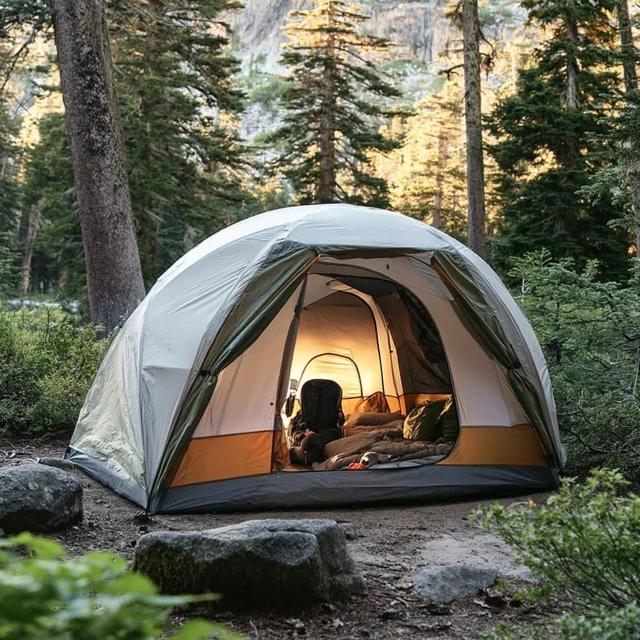
The first time I pitched a tent and the wind grabbed the fly like a sail, I learned something important: a tent is only as good as its setup. That night, the poles bowed and the fabric snapped against my face. I barely slept. But that experience taught me a handful of tent camping ideas that transformed every trip since. Not complicated tricks. Just smart methods that work.

Wind-Proof Your Tent Before the First Gust
Most people stake the four corners and call it done. That is a mistake. Wind finds every loose bit of fabric and works it until something gives. Here is the technique I use every time.
First, orient the tent so the narrow end faces the prevailing wind. This reduces the surface area the wind can push against. Second, stake every single loop and guyline point the tent came with — not just the corners. For the guylines, pull them taut and stake them at a 45-degree angle away from the tent. That angle creates a downward pull that resists lifting forces.
Common mistake: staking guylines parallel to the tent. That only resists side-to-side movement, not upward lift. The 45-degree angle is the difference between a tent that stays put and one that tries to fly away.
If you are camping on sand or loose soil, use wider stakes (like sand stakes or even flat rocks tied to the lines as deadmen). For hard-packed ground, bring a small mallet and use stakes with a T-head — they drive in better and hold more securely.
Stop Condensation Before It Wakes You Up Damp
Condensation is the number one comfort killer in tent camping, and it has nothing to do with rain. It happens when warm, moist air from your breath hits the cold tent wall and turns to water. The fix is not complicated, but it requires deliberate action.
Pitch your tent on a dry, slightly elevated spot. Avoid low areas where cold air and moisture collect overnight. If you are near a lake or river, set up at least 100 feet away — the extra humidity near water makes condensation worse.
Open every vent your tent has. Yes, even if it is cold. The trade-off is a slightly cooler tent versus waking up in a damp sleeping bag. I crack the door mesh but keep the rain fly closed. This allows moisture to escape while keeping dew off the inner tent.
Another trick: do not breathe into your sleeping bag. Pull the hood of your bag away from your face. That one change reduces interior moisture significantly.
If condensation still forms, wipe the inner walls with a small camp towel before packing up in the morning. This keeps your tent dry for the next night and prevents mildew over time.
Sleep Warm Without the Cold Ground Sucking Your Heat
The ground is a heat thief. A sleeping bag alone is not enough because the insulation underneath you gets compressed and loses its loft. That means you are essentially sleeping on a thin layer of fabric between you and the cold dirt.
The most effective solution is elevation. A camping cot lifts you off the ground entirely, allowing air to circulate underneath. This stops conductive heat loss cold. If a cot is too bulky, use a two-layer pad system: a closed-cell foam pad (the kind that rolls up) on the bottom, and an inflatable pad on top. The foam blocks the cold, and the inflatable adds cushioning.
For cold-weather camping, add a wool blanket over your sleeping bag. Wool holds warmth even if it gets damp. I tuck the blanket around the edges of the pad to trap heat underneath me.
Safety note: never use a camp stove, heater, or any open flame inside a tent. Carbon monoxide is invisible and deadly. If you are cold, add more layers or a hot water bottle in a sock at the foot of your bag.
Keep Gear Organized Without Tripping Over It
A cluttered tent is a miserable tent. You cannot sleep, you cannot find your headlamp, and you step on things in the dark. Organization is about systems, not stuff.
Use a gear loft or a simple mesh hammock suspended from the tent ceiling. This keeps small items — glasses, phone, map, headlamp — off the floor and within reach. Hang a small stuff sack from the tent loop for trash. That way, wrappers and tissues do not end up in your sleeping bag.
For footwear, keep a dedicated dry pair of camp shoes inside the tent vestibule. Wet boots go outside under the rain fly, but not inside the tent. This keeps moisture and dirt out of your sleeping area.
Pack in clear, labeled dry bags for clothes and food. This makes finding what you need fast, even in the dark with a headlamp.
Food storage note: never store food in your tent. The smell attracts animals. Use a bear canister or hang a bear bag at least 200 feet from your tent and 12 feet off the ground.
Make the Tent Feel Cozy Without Adding Weight
Cozy does not mean extra gear. It means using what you have intentionally. String a small battery-powered LED string light along the tent ridge line. The warm light changes the feel of the space instantly. Hang a fleece blanket over the tent door for a little extra warmth and privacy.
Use a small camp towel as a rug just inside the door. It catches dirt and gives a place to sit while taking off boots. A few clothespins on the tent loops let you hang damp socks or a bandana to dry.
When camping with kids, give each child their own small stuff sack for a flashlight and a comfort item. This reduces bedtime chaos and gives them a sense of ownership over their space.
A Final Thought on Tent Camping Ideas That Stick
The best tent camping ideas are the ones that solve a problem you did not know you had until 2 a.m. Wind, cold, damp, clutter — each one is preventable with the right method. Pick one idea from this list and try it on your next trip. That single change might be the difference between a night of tossing and a night of deep, quiet sleep under the stars.
Frequently Asked Questions
What is the best way to keep a tent from blowing away in wind?
Use all guylines and stake them at a 45-degree angle away from the tent. Orient the narrow end of the tent into the wind. For extra security, add a tarp over the fly, staked separately, to break the wind.
How can I stop condensation inside my tent?
Ventilation is key. Open all vents and the door mesh if weather permits. Avoid breathing into your sleeping bag. Also, pitch your tent on a dry, elevated spot away from water sources and use a ground cloth that doesn’t extend beyond the tent footprint.
What is the most comfortable way to sleep on the ground while tent camping?
Elevate off the ground with a camping cot if possible. If not, use a thick foam pad (at least 2 inches) plus an inflatable pad on top. Avoid air mattresses alone in cold weather as they conduct cold from the ground.