
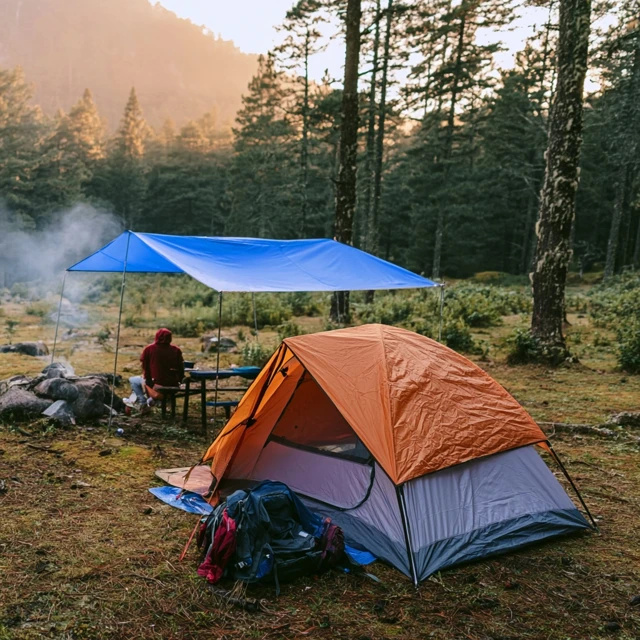
The first drops hit the fly. A soft drumming at first, then a steady patter. If you’ve pitched right, that sound is a lullaby. If you haven’t, it’s the start of a damp, miserable night. Rain doesn’t have to ruin a trip. It just means you need to think ahead. Here are the techniques I use to keep everything dry, from the moment the first cloud rolls in to the last soggy pack-up.

Pitch the Rain Fly First
Most people set up the inner tent, then throw the fly over. In a downpour, that inner tent soaks up water before you can get the fly on. Instead, I pitch the rain fly first. Lay the fly on the ground, stake the corners, then insert the poles through the fly’s sleeves or clips. Once the fly is up, I attach the inner tent underneath. The inner stays bone-dry. It takes a little practice, but it’s a game-changer. If your tent doesn’t allow a fly-first pitch, use a large umbrella or a lightweight tarp as a temporary roof while you set up the inner.
Seal Every Seam Before You Go
Factory seams are often only taped, and that tape can fail after a few seasons. I run a thin bead of seam sealer along every interior seam—the fly, the floor, and the inner tent corners. Apply it with a small brush or the applicator tip. Let it cure for 24 hours in a dry, ventilated space. One common mistake is sealing only the fly. The floor seams are just as critical, especially if you camp on sloped ground where water runs underneath. Test your work by setting up the tent and spraying it with a hose. Look for any beading or dark spots inside.
Create a Rain Ditch (But Do It Right)
If you’re on a slope, water will flow toward your tent. A shallow ditch on the uphill side can divert it. Dig a trench about 4 inches deep and 6 inches wide, angled away from the tent. Make sure the spoils (the dirt you remove) are piled on the downhill side, so water doesn’t just run back into the trench. Avoid digging too close to the tent—leave at least a foot of undisturbed ground between the trench and the tent wall. Check local regulations: some areas prohibit digging for ecological reasons. If that’s the case, use a sandbag or a rolled-up towel to create a berm instead.
Keep the Vestibule Dry
Wet gear in the vestibule can turn your tent into a sauna. I hang a small mesh bag from the vestibule ceiling for damp socks and gloves. For boots, I place them on a small plastic tray or a cut-out piece of foam pad. That keeps them off the wet ground and allows air to circulate. If you don’t have a vestibule, use a lightweight tarp (6×8 feet) strung over the tent entrance. Stake two corners high on trekking poles or tree branches, and the other two low to the ground. This creates a dry entry zone. Just make sure it doesn’t block ventilation.
Manage Condensation Like a Pro
Rain outside often means condensation inside. Warm, moist air from your breath hits the cold fly and turns to water. The fix is ventilation. Open the fly’s vents fully, even in a steady rain. If your tent has a mesh inner, leave the inner door unzipped a few inches. I also carry a small pack towel (like a lightweight microfiber cloth) to wipe down the interior walls each morning. That moisture, if left, will drip onto your sleeping bag. Another trick: sleep with your head near the vent, not the tent wall. Your breath is the biggest source of humidity.
Pack a Dry Change of Clothes
No matter how good your setup, you’ll get some dampness. I keep a complete change of base layers in a waterproof stuff sack (a dry bag or a heavy-duty plastic bag). That sack stays in the tent, not in the pack. When I crawl in for the night, I change into dry clothes. The wet ones go into a separate waterproof bag, sealed tight. This simple habit prevents the chill that comes from sleeping in damp clothing. For kids, make this a ritual: everyone changes before getting into their sleeping bags.
Take Down in Reverse Order
Packing up wet gear is the fastest way to get mildew. When it’s time to leave, I reverse the pitch order. First, dry the inner tent with a towel if possible. Then remove the inner and pack it in a waterproof bag. Finally, take down the rain fly, shake off excess water, and pack it separately. Never pack a wet tent in the same bag as your sleeping bag or dry clothes. At home, set the tent up to dry completely before storing. Even a little dampness will cause mold.
Takeaway: Rain camping is about prevention, not reaction. A fly-first pitch, sealed seams, good drainage, and smart ventilation turn a storm into a soundtrack. Try these techniques on your next trip. You’ll sleep better, pack lighter, and wake up dry.
Frequently Asked Questions
Can I use a regular tarp under my tent?
Yes, but never let the tarp extend beyond the tent footprint. If it sticks out, rain hits the tarp and pools under your tent floor. Fold or cut it to match the tent base exactly.
How do I stop condensation inside my tent?
Ventilation is key. Open the rain fly vents fully, even in rain. Use a mesh inner tent. Wipe down interior walls with a small towel before packing. Avoid cooking or breathing heavily inside a sealed tent.
What should I do if water leaks through the tent floor?
First, check if the leak is from a seam or a puncture. For seams, apply seam sealer from inside. For small holes, use a patch kit or tent repair tape. As a quick fix, place a lightweight waterproof groundsheet (like Tyvek) inside the tent under your sleeping pad.