
There’s nothing like the smell of pine and woodsmoke mixing with the sizzle of something good in a pan. But I’ve learned the hard way that ambitious camp cooking—the kind that requires a cutting board, three pots, and a marinade—usually ends with me eating a granola bar in the dark while scrubbing a greasy pan with cold water. So over the years, I’ve dialed in a short list of tent camping meals that are genuinely satisfying, require minimal gear, and leave me with more time to sit by the fire.

The trick is to think in two categories: no-cook meals for breakfast and lunch (when you want speed and zero cleanup), and one-pot dinners that use just a single burner or the coals. Here’s exactly how I do it, with the gear sizes and techniques that make it work.
No-Cook Breakfasts That Actually Fill You Up
I used to think a hot breakfast was mandatory. Then I realized that boiling water for oatmeal takes ten minutes, and by the time I’ve eaten, the tent is already heating up and I’m sweating into my coffee. Now I rely on two no-cook options that take under two minutes to assemble.
The Peanut Butter & Banana Wrap
Take one large flour tortilla (burrito size, about 10 inches). Spread a generous tablespoon of peanut butter across the center. Place half a banana (sliced lengthwise) on top, then sprinkle a tablespoon of granola or crushed nuts for crunch. Roll it up tight like a burrito, tucking in the sides. That’s it. No plate, no knife needed if you break the banana with your hands. The protein and carbs hold me through a morning hike.
Overnight Oats in a Jar
Before you leave home, fill a 16-ounce wide-mouth jar with 1/2 cup rolled oats, 1/2 cup powdered milk or shelf-stable milk carton, 1 tablespoon chia seeds, and a pinch of salt. At camp, add water to the fill line, shake vigorously, and let it sit for 5 minutes. Top with dried fruit or nuts. The jar doubles as your bowl. No spoon washing if you eat straight from the jar.
Common mistake: using instant oats. They turn to mush. Rolled oats hold their texture even after sitting overnight.
One-Pot Dinners: The Workhorse of Tent Camping Meals
For dinner, I carry a single 2-liter pot with a lid. That pot does everything. The method is simple: cook a starch (pasta, rice, or couscous) with a protein and vegetables, all in one pot, in that order. No draining, no extra dishes.
Lentil & Sausage Skillet
This is my go-to on cool evenings because it’s hearty and uses shelf-stable ingredients. At home, I pre-cook 1 cup of brown lentils and store them in a ziplock bag. At camp, add 2 cups of water to the pot and bring to a boil. Drop in a pre-cooked smoked sausage (sliced into coins) and the lentils. Simmer for 5 minutes. Stir in a packet of pre-chopped kale or spinach (it wilts fast) and a tablespoon of olive oil. Serve straight from the pot. The lentils provide protein and fiber without needing refrigeration.
Quick Coconut Curry Couscous
For a lighter, warmer-weather meal, this one comes together in under 10 minutes. In your pot, combine 1 cup instant couscous, 1 cup water, 1/2 cup coconut milk powder (available in most grocery stores), 1 tablespoon curry powder, and a handful of dried vegetables (like freeze-dried peas and carrots). Bring to a boil, stir, cover, and remove from heat. Let it sit for 5 minutes. Fluff with a fork. The coconut milk powder adds richness without needing refrigeration.
Why this works: Couscous doesn’t need to be drained, so you save water and avoid a messy colander. The dried vegetables rehydrate in the steam.
Foil Packet Meals Over the Fire
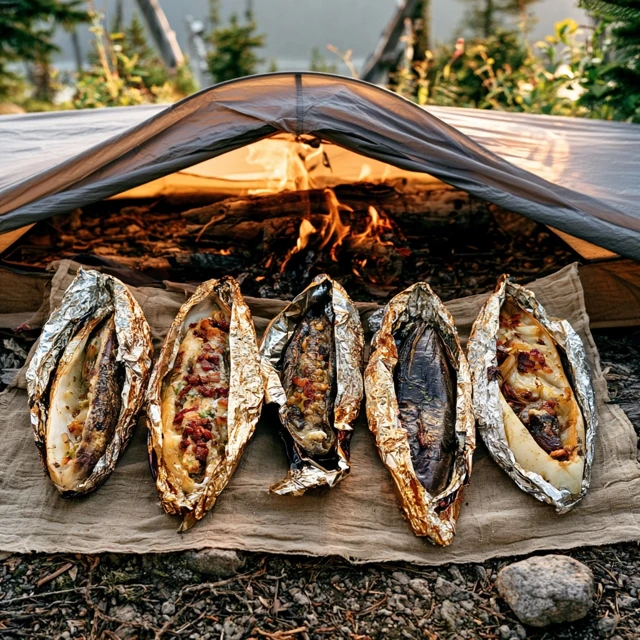
If you have a campfire, foil packets are the ultimate low-cleanup method. I use heavy-duty aluminum foil (the standard 18-inch wide roll) and tear off sheets about 18 inches long. For each packet, I layer sliced potatoes (1/2 inch thick), a handful of green beans, a few chunks of pre-cooked chicken or sausage, a pat of butter, and salt and pepper. Fold the foil into a tight packet, leaving a little air space inside. Place directly on medium-hot coals (not flames) for 15 minutes, flipping once halfway. Let it rest for 2 minutes before opening—steam burns are real.
Pro tip: double-layer the foil for thicker packets, and always test one packet first to adjust cooking time. Coals from hardwood (like oak or hickory) burn hotter and longer than softwood coals.
Lunches That Don’t Need a Stove
Lunch is often a quick affair between activities. I keep it simple with shelf-stable tortillas, a pouch of tuna or pre-cooked bacon, and a single-serve packet of mayonnaise. Spread the mayo on the tortilla, add the protein, and roll it up. For crunch, toss in a handful of trail mix. No plates, no waste, and the whole thing fits in a pocket.
Another favorite: instant hummus mix (just add water) with pre-cut vegetable sticks like carrots and bell peppers. The vegetables keep well for two days if stored in a sealed bag with a damp paper towel.
Gear That Makes It Easier
You don’t need a full kitchen setup. Here’s what I carry specifically for these meals:
- 2-liter pot with lid – big enough for two servings, small enough to pack. I prefer stainless steel because it heats evenly and doesn’t scratch like nonstick.
- Long-handled spoon – a wooden or silicone spoon that reaches the bottom of the pot without burning your hand.
- Small cutting board – the size of a paperback book, just for slicing sausage or cheese.
- Wide-mouth jar – for overnight oats and as a drinking cup.
Safety note: Always cook at least 10 feet from your tent. Carbon monoxide from camp stoves is invisible and odorless. And never leave a lit stove unattended—wind can knock it over in seconds.
Adapting for Weather
In cold weather, I double the fat—more oil or butter in the pot—because your body burns more energy keeping warm. In hot weather, I skip anything that requires simmering for more than 10 minutes and stick to no-cook lunches and foil dinners that cook fast over coals. Rainy evenings call for meals that cook under a tarp: one-pot curries or soups that don’t need a fire.
The real secret to good tent camping meals isn’t fancy ingredients. It’s knowing exactly what you’ll cook before you leave, prepping what you can at home, and choosing recipes that let you eat hot food with one pot to wash. That’s the difference between a meal that fuels your trip and one that feels like work.
Takeaway: Pick two no-cook breakfasts, one one-pot dinner, and one foil packet recipe. Test them at home once. Then pack light, eat well, and spend your evenings looking at the stars instead of scrubbing pans.
Frequently Asked Questions
What are the easiest tent camping meals for beginners?
No-cook options like peanut butter wraps, pre-made salads, and overnight oats are the simplest. One-pot meals like chili or pasta with jarred sauce require only boiling water and one pot to clean.
How can I keep food cold without a heavy cooler?
Freeze water in 1-liter bottles and use them as ice blocks. They last longer than cubes and double as drinking water as they thaw. Pack a separate cooler for drinks to avoid opening the food cooler frequently.
Can I cook inside my tent?
Never cook inside a tent. Carbon monoxide from camp stoves can be fatal, and open flames pose a fire risk. Always cook at least 10 feet from your tent in a well-ventilated area.
What is the best way to store food at a tent campsite?
Store all food, trash, and scented items in a bear-proof container or hang them in a bear bag at least 10 feet off the ground and 4 feet from the trunk. Check local regulations for specific requirements.