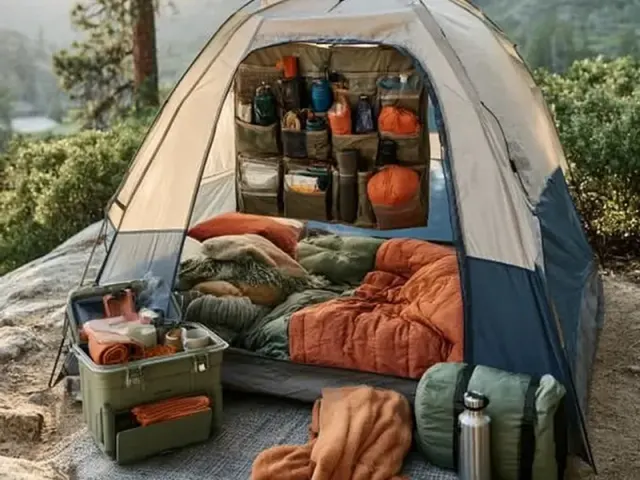
Tent Camping Organization: 5 Systems That Actually Work
The first time I unzipped my tent after a long day of hiking, I was greeted by a tangle of sleeping bags, half-eaten granola bars, and a headlamp that had somehow migrated into my boot. That chaos cost me ten minutes of searching and a good night's sleep. Since then, I've refined a few systems that turn a tent from a jumble of gear into a calm, functional space. Here's what actually works.

Zone Your Tent Floor
Think of your tent as three zones: the door zone, the sleep zone, and the storage zone. The door zone is a 2-foot-by-2-foot area right inside the entrance. This is where wet shoes, muddy boots, and the daypack go. Lay down a small, lightweight tarp or a cut piece of foam mat here. In rain, this zone keeps the rest of the tent dry. A common mistake is to put your sleeping pad too close to the door, so every time someone enters, condensation or mud splashes onto your bedding. Keep the sleep zone at least 18 inches from the door.
The sleep zone is just for sleeping pads and bags. Nothing else. No electronics, no food, no extra clothes. This keeps the sleeping area clean and reduces the chance of attracting critters. The storage zone is the rest of the tent. Use it for gear bags, a change of clothes, and your cooking kit if you're storing it inside (though I prefer to keep food in a bear canister away from the tent).
Vertical Storage Changes Everything
Ground space is precious. Use the tent's ceiling and walls. A gear loft that clips to the tent's interior loops holds headlamps, glasses, a book, and a phone. I hang a small mesh pocket near the door for sunscreen, bug spray, and a pocket knife. For families, a hanging shoe organizer with clear pockets works wonders for keeping kid-sized items sorted.
One trick I use: a lightweight clothesline strung diagonally across the tent ridge. On dry nights, I hang damp socks or a towel. On humid nights, I hang my headlamp and watch so they're always within reach. The line also serves as a visual divider between the sleep and storage zones.
Color-Coded Dry Bags
Dry bags aren't just for kayakers. I use three different colors: one for clothes, one for electronics and documents, and one for the first-aid kit and toiletries. This system means I can grab the right bag without unzipping everything. In a downpour, the dry bags keep contents safe, and they double as pillows when stuffed inside a stuff sack. For cold weather, I pack a separate dry bag with an extra insulating layer and a beanie—easy to grab without opening the main bag.
For families, assign each person a color. My system: red for me, blue for my partner, green for the kids. No more "whose shirt is this?" arguments.
The Kitchen Tote
A dedicated kitchen tote keeps cooking gear separate from sleeping gear. I use a clear plastic tote with a lid (about 18 inches long, 12 inches wide, and 10 inches deep). Inside, I use small plastic bins or reusable bags to group items: one bin for spices and oil, one for utensils, one for the stove and fuel canisters. The clear lid means I can see what's inside without opening it. I keep this tote in the tent's storage zone at night to prevent condensation on metal cookware from dampening sleeping gear. During the day, it lives under the picnic table or in the car.
One mistake: packing kitchen gear in the same bag as your clothes. Spilled oil or a leaking fuel canister can ruin a trip. Keep them separate.
The Nighttime Essentials Pouch
Nothing is worse than fumbling for a headlamp at 2 a.m. when you need to use the bathroom. I keep a small stuff sack (about 6 by 8 inches) clipped to the gear loft. It holds a headlamp, a mini flashlight, a whistle, and a pack of tissues. In cold weather, I add a pair of gloves and a warm hat. This pouch stays in the same spot every trip, so muscle memory takes over. No searching, no panic.
Weather-Specific Adjustments
In hot, humid weather, keep your tent unzipped as much as possible for airflow, but use a mesh screen to keep bugs out. Store your sleeping bag loosely in a stuff sack to prevent moisture buildup. In cold weather, bring your water filter inside the tent at night so it doesn't freeze. Keep fuel canisters outside in a well-ventilated area, never inside the tent. For windy conditions, stake down the tent's vestibule and use it as a windbreak for your kitchen tote.
Safety note: Never use a camp stove, lantern, or heater inside a tent. Carbon monoxide is odorless and deadly. Always cook outside, at least 10 feet from the tent entrance.
The Takeaway
Tent camping organization isn't about perfection—it's about reducing friction. A few zones, some vertical storage, color-coded bags, and a dedicated kitchen tote turn a chaotic tent into a restful home. The next time you unzip your tent after a long day, you'll know exactly where everything is. And that feeling? That's the difference between a good trip and a great one.
Frequently Asked Questions
How do I keep my tent organized when camping with kids?
Assign each child a specific color-coded dry bag for their clothes and toys. Use a hanging shoe organizer for small items like sunscreen, flashlights, and snacks. Keep a designated 'dirty gear' bin near the tent door to prevent mud and sand from spreading inside.
What is the best way to organize a tent for rainy weather?
Place a waterproof mat just inside the tent door. Keep all gear in dry bags or sealed plastic bins. Hang a small clothesline inside the tent for wet towels or rain jackets. Store electronics in a dedicated waterproof pouch. Always stake down a rain fly with proper tension to keep water out.
How do I organize a small tent with limited space?
Use vertical storage: hang a gear loft from the tent ceiling, attach mesh pockets to the tent walls, and use compression sacks for bulky items like sleeping bags. Store your sleeping pad and sleeping bag on one side, and keep a small 'nighttime essentials' pouch near your head.
What should I do with dirty shoes and muddy gear at camp?
Set up a designated 'mud room' just outside the tent door: a small tarp or doormat for shoes, a plastic bin for muddy gear, and a towel for wiping paws or boots. Inside the tent, keep a separate dry bag for dirty clothes to keep everything else clean.