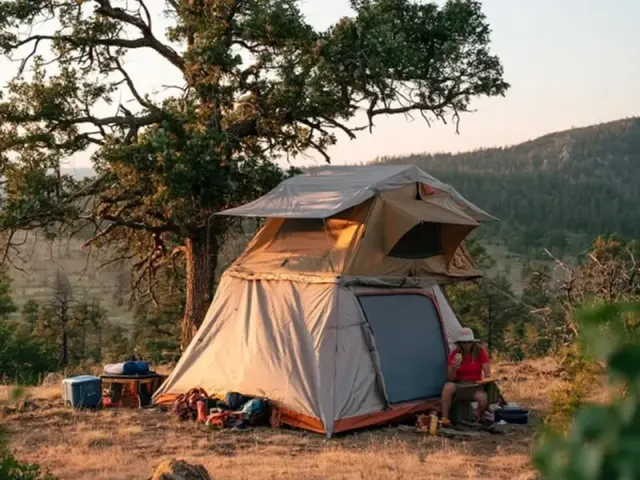
Tent Camping Hacks Organization: 7 Clever Systems That Actually Work
The first time I unzipped my tent after a long hike and saw a jumble of sleeping bags, cookware, and loose socks, I knew something had to change. That chaos wasn't just annoying — it made me waste time, lose small items, and even risk damaging gear. Over many trips, I've refined a handful of tent camping hacks organization systems that keep everything in its place, even in rain or wind. These aren't vague tips; they're specific, repeatable methods you can set up in minutes.

Zone Your Tent Like a Tiny Home
Before you even lay out your sleeping pad, decide where each category of gear belongs. I use three zones: sleep (the far end), storage (the middle), and entry (near the door). This prevents that dreaded gear pile-up at the entrance.
For the storage zone, I bring two clear plastic bins — roughly 12x12x6 inches each. One holds cooking gear and food (sealed in bear-proof containers, of course). The other holds clothes and toiletries. Clear bins let me spot a headlamp or a spork without opening every lid. Why clear? Because when it's dark and you're tired, fumbling through opaque bags is frustrating. Label each bin with a permanent marker on a strip of duct tape — "Kitchen" and "Clothes" — so everyone in your group knows where things go.
Common mistake: Storing damp gear in the same bin as dry clothes. Always air out wet items under the vestibule or hang them from a clothesline inside the tent before packing away. A small mesh laundry bag (about 18x24 inches) clipped to the tent pole near the door catches damp socks and rain jackets instantly.
The Mesh Pocket System for Essentials
Most tents come with a few mesh pockets sewn into the walls. But I've found that adding two or three aftermarket mesh hanging organizers (the kind with multiple pockets, about 12x18 inches) transforms a tent's usability. Hang one near your head for nighttime essentials: headlamp, phone, glasses, lip balm, earplugs. Hang another near the door for daytime items: map, sunscreen, bug spray, a small flashlight.
The trick is to use carabiners to attach these organizers to the tent pole clips or loops. This keeps them stable even when you roll over in your sleep. I also clip a tiny carabiner to each zipper pull on my tent — it makes opening the door from inside much easier, especially with cold fingers.
Adapt for wind: If you're camping in a breezy spot, secure loose items like organizers and bins with a bungee cord tied to a tent stake or a heavy rock inside the tent. A stray gust can flip a bin or scatter papers.
Pre-Camp Sorting: The Tarp Method
Here's a hack that saves me at least 15 minutes every setup: before you load your car, lay out all your gear on a large tarp (at least 8x10 feet) in your driveway or living room. Group items by zone — sleep, kitchen, clothes, tools. Then pack them into separate stuff sacks or bins in the order you'll need them. The first bag you grab should be the tent itself, then the sleeping pads, then the bins.
This sounds obvious, but I've seen campers unpack their entire car just to find a stove. By pre-sorting, you can set up your tent in under 10 minutes, then simply carry the zone bins inside. No digging, no swearing.
Lighting That Doesn't Create Shadows
Organization isn't just about where things sit — it's about being able to see them. I use two light sources inside the tent: a dim lantern (around 50 lumens) hung from the center loop, and a red-light headlamp on my forehead. The lantern provides ambient light so I can find the kitchen bin; the red light preserves night vision and doesn't blind my partner.
Hang the lantern from a small carabiner clipped to the tent's center ridge. If your tent lacks a loop, tie a short piece of paracord between two poles and clip the lantern there. This keeps the light source high and spreads illumination evenly, avoiding harsh shadows that hide small objects.
The "One-In, One-Out" Rule for the Entry
The entrance is the most chaotic zone — shoes, backpacks, water bottles, and extra layers pile up fast. I enforce a simple rule: for every item that comes into the tent, one must go out or be stored in its designated spot. Shoes go in a small bin placed just outside the door under the vestibule. Backpacks hang from a carabiner on the tent pole near the door, not on the floor.
This rule keeps the entry clear and prevents tripping hazards. It also reduces the amount of dirt and debris tracked into your sleeping area. If you're camping with kids, assign each child a small bin for their personal items (toys, books, snacks) and make them responsible for packing it up each morning.
Dry Bags for Wet Weather Strategy
Rain can ruin an organized tent in minutes. I keep two dry bags (10-liter size) inside the tent at all times: one for electronics and one for a change of dry clothes. When rain starts, I can quickly seal these bags and know my essentials stay dry. The rest of the gear can get damp, but the critical items are protected.
During a downpour, I also place a small tarp (4x6 feet) just inside the door as a "mud mat" — it catches dripping water and mud from shoes. Roll it up and shake it out in the morning. This simple step keeps the tent floor from becoming a swamp.
Morning Reset: The 60-Second Tidy
Finally, end each day with a quick reset. Before you crawl into your sleeping bag, spend 60 seconds putting everything back in its zone. Return the headlamp to the mesh pocket, zip the kitchen bin closed, and shake out the mud mat. This habit means you wake up to a clean, organized space — and you'll never lose your lighter under a sleeping pad at 2 a.m.
Takeaway: Tent camping hacks organization isn't about buying fancy gear — it's about creating predictable homes for every item and sticking to a simple routine. Start with zones, add mesh pockets, pre-sort before you pack, and use dry bags for weather protection. Your tent will feel twice as big and your trip will be twice as enjoyable.
Frequently Asked Questions
What is the best way to organize gear inside a tent?
Use a system of clear plastic bins (around 12x12x6 inches) for small items, hanging mesh pockets on tent walls for essentials like headlamps and phones, and a dedicated dry bag for dirty/wet clothes. Keep a designated 'kitchen bin' and 'clothing bin' to avoid searching.
How do I keep my tent floor clean and dry?
Lay a lightweight tarp just inside the tent door as a 'mud mat' — it catches dirt and moisture. Keep a small hand broom and dustpan near the door for quick sweeps. Store shoes in a mesh bag hung from the tent ceiling or in a small bin just outside the door under the vestibule.
What is the number one mistake people make with tent organization?
The biggest mistake is not having a 'home' for each item before you set up. Without a pre-planned system, gear gets scattered, and you waste time digging. Always unpack into zones: sleep area, storage area, and entry area. Label bins and bags so everyone in your group knows where things go.