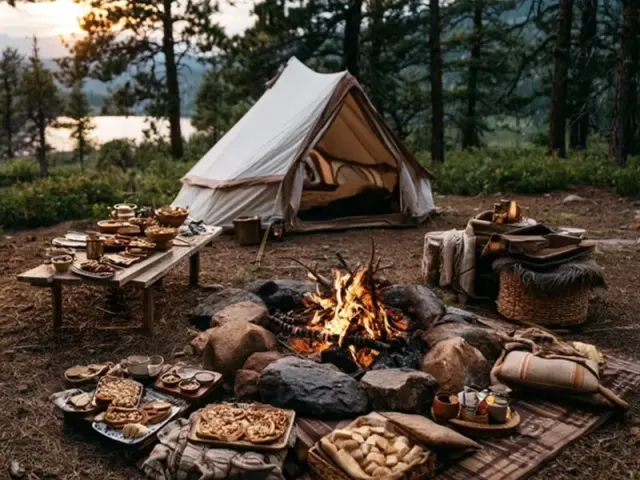
Rustic Tent Camping Aesthetic Food: Simple Yet Beautiful Meals
The first time I set a wooden cutting board on my camp table, I felt something shift. The scattered almonds, the deep red of a sliced strawberry, the pale green of avocado—it looked like a still life, not a rushed snack. That’s the heart of tent camping aesthetic food. It’s not about fancy gear or hours of prep. It’s about intention: how you arrange, layer, and serve what you already bring.

Why Aesthetic Food Matters at Camp
A beautiful meal changes the mood. After a long hike, sitting down to something that looks as good as it tastes slows you down. It turns a refueling stop into a moment. And it’s surprisingly easy—if you know a few tricks.
The No-Cook Platter: Your Best Friend
I always pack one no-cook meal per day. The platter method works for breakfast, lunch, or dinner. I use a lightweight bamboo cutting board (about 12x8 inches) or a flat rock if I’m feeling rustic. The key is contrast: pair bright cherry tomatoes with dark olives, white cheese cubes with red grapes, and crunchy nuts with soft bread. Arrange in small clusters, not lines. Leave a little space between groups so it feels curated, not crammed.
A common mistake is overloading the board. Stick to four or five ingredients. For protein, add pre-cooked sausage slices or canned chickpeas. For greens, use a separate bowl or tuck a handful of arugula under the cheese. This keeps everything from getting soggy.
Layered Jars for Instant Beauty
Layering in a clear jar is the easiest way to make food look intentional. For breakfast, I layer Greek yogurt, granola, and berries in a 16-ounce wide-mouth mason jar. The trick is to pack the yogurt firmly so the layers stay distinct. I add the granola just before eating—otherwise it turns soft. For lunch, I do a jar salad: dressing at the bottom, then hearty veggies like carrots and bell peppers, then greens on top. Shake it when you’re ready to eat.
One tip: use a silicone lid instead of metal to avoid rust. And always pack jars upright in a cooler or a padded bag. I learned that the hard way after a dressing-soaked sleeping bag.
Hot Meals That Look Good Too
Even one-pot meals can be aesthetic. I cook chili or pasta on my camp stove, then serve in enamel bowls. The trick is the garnish: a sprinkle of fresh cilantro or parsley (I pack a small bunch in a damp paper towel inside a reusable bag), a few cracks of black pepper, or a drizzle of olive oil. It takes ten seconds but transforms the bowl.
Another idea: cook quesadillas on a cast iron skillet. The golden-brown marks look great. Cut them into triangles and fan them on a plate with a side of salsa in a small jar. Avoid overfilling—they fall apart and look messy.
Color as a Tool
Color is your shortcut to aesthetic. I plan meals around three colors: red (tomatoes, strawberries, bell peppers), green (cucumber, avocado, herbs), and white (cheese, yogurt, cauliflower). Add a neutral like brown (nuts, bread, granola) for grounding. If a meal has only one color—like beige pasta—it looks flat. A sprinkle of red pepper flakes or a few basil leaves fixes that instantly.
Drinks and Dessert
Don’t forget the drinks. I make sun tea in a clear jar: put a tea bag in cold water, leave it in the sun for a few hours, then add lemon slices and a sprig of mint. It’s gorgeous and refreshing. For dessert, I layer crushed graham crackers, chocolate chips, and mini marshmallows in a jar—a deconstructed s’more. Eat it cold or warm it near the fire.
Practical Considerations
Keep food safety in mind. Use a cooler with ice packs for perishables. Wash your hands or use sanitizer before handling food. And store all food in bear-proof containers or a car at night—don’t leave it in the tent. A beautiful meal isn’t worth a midnight visitor.
A Final Thought
You don’t need a gourmet kitchen. You need a little intention. A wooden board, a jar, a few colorful ingredients—that’s enough to turn a campsite meal into something you remember. The best part? It takes no extra time, just a different way of seeing what you already pack.
Frequently Asked Questions
What is tent camping aesthetic food?
It's about making campsite meals visually appealing without extra effort—using color, layering, and simple plating to turn basic ingredients into something you'd want to photograph. Think a yogurt parfait in a jar or a salad on a wooden board, not just a granola bar wrapper.
How do I make camping food look good without cooking?
Focus on no-cook ingredients: pre-washed greens, cherry tomatoes, cheese cubes, cured meats, fruit, nuts, and bread. Arrange them on a cutting board or in clear jars. Use color contrast—red tomatoes on green lettuce, white cheese next to dark berries—and layer in jars for a parfait effect.
What are the best containers for aesthetic camping meals?
Wide-mouth mason jars (16 oz or 32 oz) work for layered salads and parfaits. Lightweight wooden cutting boards or bamboo plates double as serving platters. Reusable silicone bags hold snacks. Avoid glass if weight is a concern; use BPA-free plastic containers instead.
Can I make hot meals look aesthetic while camping?
Yes. Use a small camp stove to cook one-pot dishes like chili or pasta, then serve in enamel bowls with a garnish of fresh herbs (packed in a damp paper towel). A sprinkle of cheese or a drizzle of olive oil adds visual appeal. Keep it simple—overcomplicating defeats the purpose.