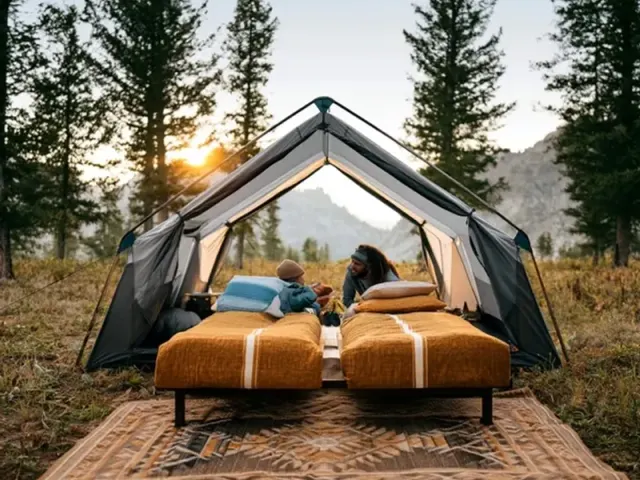
Cozy Tent Camping for Two: Setup & Comfort Tips
The first time I pitched a two-person tent, I made a classic mistake: I centered everything. The tent, the pads, the gear—all right down the middle. It looked symmetrical, sure, but sleeping felt like a game of inches. Every time my partner rolled over, I felt the whole tent shift. That night taught me something important: camping as a couple isn't about squeezing into a space. It's about creating a system where two people can move, breathe, and sleep well.

Here's what I've learned from years of tent camping with a partner—practical, tested ideas that make the experience genuinely comfortable, not just tolerable.
Choose a Tent That Works for Two—Not Just for Two People
A two-person tent sounds logical, but the reality is tight. Most two-person tents are barely wide enough for two sleeping pads side by side, and that leaves zero room for bags or boots. For car camping, I recommend a three-person tent. The extra width means you can fit two wide sleeping pads (25 inches each) with a small gap between them. No more fighting for elbow room.
Look for a tent with two doors and two vestibules. This is non-negotiable for couples. With a single door, someone always has to crawl over the other to get out at night. Two vestibules let each of you store your own gear—boots, pack, jacket—without mixing things up. It keeps the tent floor clear and the mood calm.
Common mistake: buying a tent based on the number of people it claims to hold, not the actual floor dimensions. Always check the width and length. A tent that's 50 inches wide is fine for two narrow pads, but 60 inches gives you breathing room.
The Sleep System: Two Pads, One Warm Space
Sleeping pads are where most couples go wrong. Two separate pads often create a cold gap between them, and they can slide apart during the night. A simple fix: use a pad coupler or a wide double pad. If you use two separate pads, place a foam pad or closed-cell pad underneath both to create a unified thermal layer. This stops cold air from sneaking up between you.
For sleeping bags, I prefer two individual bags rather than a double. Why? Temperature regulation. One of you runs warm, the other cold. Two bags let each person choose their own warmth level. Zip them together if you want, but keep the option to separate. A fleece blanket thrown over both bags adds a cozy layer without trapping too much heat.
Cold weather tip: Put a hot water bottle (in a thick sock) at the foot of each bag 10 minutes before bed. It warms the bag from the inside and helps you fall asleep faster. Never use a chemical hand warmer inside a sleeping bag—it can cause burns if it shifts against skin.
Organize the Interior for Two
Inside a couple's tent, every inch matters. I use two small mesh gear lofts—one on each side above the sleeping pads. Each person gets their own loft for a headlamp, phone, glasses, and a book. This eliminates the fumbling around for a shared pocket.
Keep the floor clear. I pack a small, lightweight rug (a dollar-store doormat works) for the tent entrance. Shoes come off outside and sit on the mat. Dirt and dew stay out, and the tent interior stays clean enough to walk on barefoot.
For nighttime bathroom trips, each person should have their own headlamp with a red light mode. Red light preserves night vision and doesn't wake the other person. Hang a small lantern from the tent's center loop for a soft, warm glow—it sets the mood and helps you see without harsh overhead light.
Pitch Together, Pack Together
Pitching a tent with a partner is faster and more stable if you divide tasks. One person handles the footprint and poles, the other handles the rainfly and stakes. I always stake the corners first, then the guylines. This keeps the tent taut in wind and rain. If you're expecting wind, orient the narrow end of the tent into the wind. This reduces flapping and noise.
When packing up, I use a simple rule: each person packs their own sleeping gear. One packs the tent body, the other the rainfly and poles. This splits the load evenly and makes setup faster at the next site.
Cozy Touches That Make a Difference
The best tent camping ideas for couples are often the simplest. Bring a small, battery-powered string of fairy lights to drape along the tent's ridgeline. They create a warm, intimate space without the glare of a lantern. A thermos of hot tea or cocoa before bed is a ritual that takes two minutes but changes the whole evening.
For cooking, I use a single-burner stove and a small pot. Cook one-pot meals—chili, pasta, or soup. Eat together outside the tent, then brush teeth away from the campsite to keep food smells away from the tent. Store all food in a bear canister or a car trunk, never inside the tent. A raccoon or bear doesn't care about your romantic evening.
Safety note: Never cook inside a tent. Even with the door open, carbon monoxide builds up fast. Cook outside, and let the tent air out for 10 minutes before zipping up for the night.
The Takeaway
Camping as a couple isn't about gear or grand gestures. It's about the small things: a tent that fits you both, a sleep system that keeps you warm, and a few thoughtful touches that make the tent feel like a shared space. Pitch together. Organize with intention. And remember—the best part of tent camping for two is the quiet moments between the tasks. The sound of rain on the fly, a hand reaching for yours in the dark, and the simple comfort of knowing you're both exactly where you need to be.
Frequently Asked Questions
What size tent is best for two people?
A two-person tent is fine for backpacking, but for car camping I recommend a three-person tent. The extra width lets you store gear inside without feeling cramped. Look for a tent with two doors and two vestibules so neither of you has to climb over the other at night.
How can we stay warm in a tent as a couple?
Body heat helps, but don't rely on it alone. Use insulated sleeping pads with an R-value of 4.5 or higher for cold weather. Layer a fleece blanket over both sleeping bags. Never use a camp stove or propane heater inside a tent—carbon monoxide is a real risk. A hot water bottle in a sock at the foot of your bag works wonders.
What are good tent camping activities for couples?
Keep it simple: cook a meal together on a single-burner stove, play a card game by headlamp, or stargaze through the tent mesh. The best moments are the quiet ones—sitting outside with a warm drink, listening to the night sounds. Avoid overplanning; leave room to just be together.