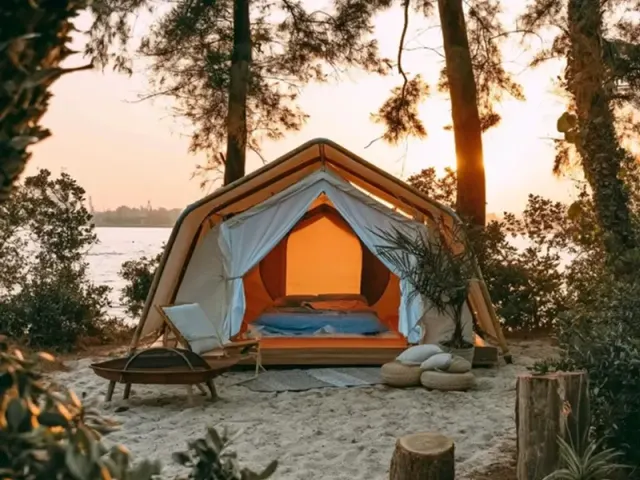
Beach Glamping: Tent Setup for Soft Sand & Sea Breezes
The first time I pitched a tent on sand, I learned a hard lesson. The wind picked up around midnight, and by morning my tent had flattened itself against a dune. Sand was everywhere—in my sleeping bag, my coffee cup, my ears. Beach camping looks idyllic, but the combination of soft ground and salty gusts demands a different approach than your forest or mountain setup. Here’s how to get that glamping feel without waking up in a sand-filled taco.

Choose the Right Spot: Above the High Tide Line
Before you even unpack, walk the beach at high tide—or check a tide chart online. You want to set up well above the highest water mark. Look for a patch of sand that’s slightly compacted, often near dunes or where the sand is darker and damp (but not wet). Avoid areas directly in the path of wind tunnels between dunes. A spot with a natural windbreak—a dune, a driftwood log, or low vegetation—can cut the breeze in half. Keep at least 50 feet from the dune edge to avoid disturbing fragile ecosystems.
Staking: Sand Stakes and the 45-Degree Rule
Regular tent stakes are useless in sand. They pull right out. You need dedicated sand stakes: long, wide aluminum or plastic ones, or corkscrew-style stakes that twist in like a giant screw. I carry a set of 12-inch aluminum sand stakes with large heads. Drive each stake at a 45-degree angle away from the tent, not straight down. This creates a mechanical anchor. Push them all the way in until the head is flush with the sand. Then—here’s the trick—fill a stuff sack or reusable sandbag with sand and tie it to each guy line point. The weight of the bag adds resistance and keeps the line taut even if the stake shifts.
Common Mistake: Not Using Guy Lines
Many people skip the guy lines on a calm day. On the beach, always use every guy line point. A sudden gust can catch the side of your tent like a sail. Attach the lines to your sand bags or stakes, and tension them so the tent fabric is taut but not distorted. Check them after the first hour—sand settles and lines can loosen.
Wind Management: Orient and Anchor
Point the narrow end of your tent into the prevailing wind. Most dome tents are symmetrical, but if you have a tunnel or cabin-style tent, the short side should face the breeze. This reduces wind resistance. If the forecast calls for gusts over 20 mph, lower your tent’s profile by not fully extending the poles, or use a windbreak wall (a tarp tied between two stakes) on the windward side. Do not attach the tarp to your tent—it can tear the fly. Keep the rainfly fully deployed, even if no rain is expected. It blocks sand and stabilizes the tent.
Creating a Cozy Glamping Vibe
Beach glamping is about comfort despite the elements. Start with a thick, insulating ground pad—sand sucks heat from your body. I use a 3-inch inflatable pad with an R-value of at least 4. Over that, a fitted sheet (yes, a real sheet) makes the tent feel like a bedroom. Bring a battery-powered string of LED lights with a remote control. Hang them along the tent ceiling or around the door frame. They create a warm glow that cuts the harshness of a headlamp.
For seating, pack low-profile camp chairs that sit close to the ground—they don’t tip over in wind as easily as tall ones. A small folding table keeps your coffee and book off the sandy floor. And a wide-brimmed hat and sunglasses aren’t just for daytime; they help keep sand out of your face during breezy evenings.
Sand-Proofing Your Space
Sand will find its way in. The best defense is a two-zone system. Lay a large tarp or outdoor rug just outside the tent door. This is your “dirty zone.” Remove shoes there. Keep a small towel or mat inside the tent door for wiping feet. Zip the tent closed immediately—every time. Inside, store clothes and gear in dry bags or stuff sacks, not loose. A battery-powered handheld vacuum or a small dustpan and brush make cleanup quick. I vacuum the tent floor every morning before the wind picks up.
Safety Notes for Beach Camping
Wind and tide are your main concerns. Never leave your tent unattended if a storm is approaching. If the wind becomes dangerous, take the tent down and seek shelter inland. Keep all food in sealed, bear-proof containers (even on the beach, raccoons and gulls are bold). Cook at least 100 feet from your tent, and never use a camp stove inside the tent—carbon monoxide builds up fast. Extinguish campfires completely with water and sand, not just sand, which can insulate hot coals.
The Takeaway
Beach glamping is achievable with the right techniques. Focus on anchoring, wind orientation, and a few comfort upgrades. The sound of waves is worth the extra effort—but only if your tent stays upright and sand-free. Next time you head to the shore, pack those sand stakes and a string of lights. Your tent will thank you.
Frequently Asked Questions
How do I secure a tent on sandy beach ground?
Standard tent stakes won't hold in dry sand. Use dedicated sand stakes (long, wide, or corkscrew-style) that are at least 12 inches long. Push them in at a 45-degree angle away from the tent, and bury them completely. For extra security, fill reusable sandbags or stuff sacks with sand and tie them to each guy line point.
What's the best tent for beach glamping?
Look for a tent with a full-coverage rainfly that extends low to the ground to block wind and blowing sand. A freestanding dome or cabin-style tent works well because you can move it after staking. Mesh panels are great for ventilation, but the rainfly should zip closed completely to keep out sand and salt spray.
How do I keep sand out of my tent?
Set up a large tarp or ground cloth outside the tent door as a 'mudroom.' Remove shoes before entering and use a small mat or towel just inside the door. Keep the tent zipped as much as possible, and avoid shaking out sandy items inside. A battery-powered handheld vacuum or a dustpan and brush helps clean up any sand that sneaks in.