
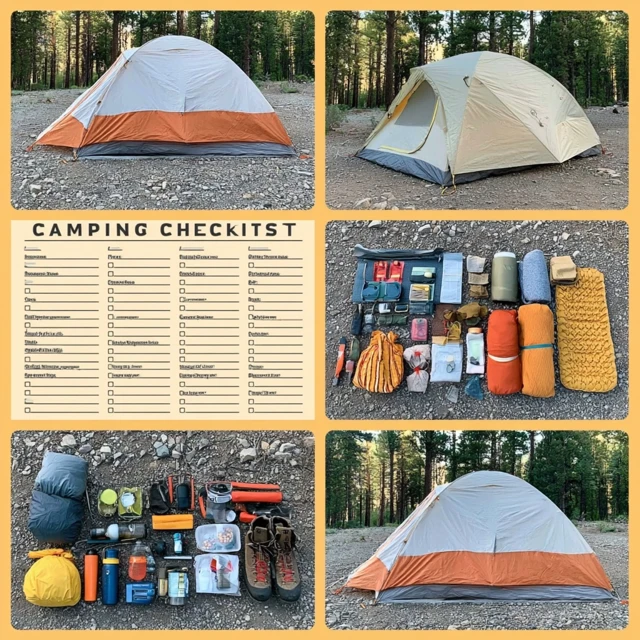
There’s a moment that happens about an hour into every camping trip. The tent is up, the sleeping pads are inflated, and you’re unrolling the kitchen tarp. That’s when you realize you forgot the coffee. Or the tent stakes. Or the one pot that fits your stove. I’ve been there, and I’ve learned that a good tent camping checklist isn’t about listing every item you can think of—it’s about packing with purpose. Here’s my method.

Start with the Shelter System
Your tent is the centerpiece of your camp. Before you think about anything else, pack it with intention. I always keep the tent itself, the rainfly, the poles, and the stakes together in one dedicated bag. But here’s the trick: I separate the stakes into a small mesh pouch or a zippered pocket inside the bag. Why? Because when you arrive at a muddy site or a rocky ledge, you don’t want to dig through a tangle of fabric to find the one thing you need first. I also pack a small tarp or footprint that’s cut exactly to the tent’s floor dimensions—this protects the tent bottom and keeps moisture out. For windy sites, I bring eight extra stakes (the heavy-duty kind, not the ultralight ones) and a spare guyline kit. A common mistake is assuming the included stakes are enough. They’re not, especially if the ground is hard or sandy.
Sleeping Gear: Layer for Temperature, Not Bulk
Your sleeping bag and pad are your comfort zone. But instead of packing the thickest bag you own, think about layering. I use a lightweight summer bag with a fleece liner for cool nights, and I add a closed-cell foam pad under my inflatable pad for extra insulation against cold ground. This system packs smaller and gives me more flexibility. For the pad, I always check the valve before leaving home—a slow leak in the middle of the night is miserable. And I pack a patch kit, even for a newer pad. One more thing: store your sleeping bag in a large cotton sack or a loose stuff sack, not compressed to death. Compression destroys loft over time. At camp, I fluff the bag as soon as I set up the tent to let it breathe.
The Camp Kitchen: One Pot, One Stove, One Cooler
Kitchen gear is where most people overpack. I limit myself to one stove, one fuel canister, one pot (a 2-liter works for most meals), one spatula, one spoon, and two bowls. For coffee, I use a pour-over cone that nests inside my mug. For water, I bring two collapsible containers: one for drinking, one for washing. The key is to plan meals that use the same pot—like oatmeal for breakfast and pasta for dinner. I also pack a small cutting board that doubles as a plate. And I always bring a bear-proof canister or a scent-proof bag for food storage, even if I’m not in bear country. Raccoons and mice are just as clever.
A Note on Fire Safety
If you plan to cook over a campfire, bring a metal grate or a tripod. Never use a camp stove inside a tent—carbon monoxide is odorless and deadly. Keep a bucket of water or sand near the fire pit, and fully extinguish the fire before you sleep. I use the “drown, stir, feel” method: pour water, stir the ashes, and feel for heat with the back of my hand.
Lighting and Power: Two Sources, One Backup
I bring two light sources per person: a headlamp and a small lantern. The headlamp is for hands-free tasks like cooking or reading. The lantern goes in the tent for ambient light. I also pack a power bank that can charge my phone twice. But here’s a specific tip: keep your phone in airplane mode to save battery, and use a red light mode on your headlamp to preserve night vision and avoid blinding your tentmates. For lanterns, I prefer one that uses rechargeable batteries and also accepts AAs as a backup. That way, if I forget to charge, I can buy batteries at a gas station.
Clothing and Layers: The Three-Layer System
Instead of packing a different outfit for every day, I bring a base layer (wool or synthetic), a mid layer (fleece), and a shell layer (waterproof jacket). I wear them in rotation. For three days, I pack two pairs of socks, one pair of pants, one pair of shorts, and two shirts. That’s it. The trick is to wash one set in a collapsible sink while wearing the other. I also pack a dry bag for wet clothes and a small mesh bag for dirty socks. For footwear, I bring one pair of hiking boots and one pair of camp sandals. The sandals let my feet breathe and keep the tent clean.
Tools and Repair Kit: The Little Things That Save a Trip
I carry a small repair kit in a pill bottle: a needle and thread, a piece of tent fabric, a small tube of seam sealer, a multi-tool, and a lighter. I also bring duct tape, wrapped around a pencil to save space. I’ve used this kit to fix a torn rainfly, a broken pole sleeve, and a snapped guyline. One more item: a small shovel or trowel for digging a cathole, and a bag for packing out all trash. Leave no trace isn’t just a rule—it’s respect for the next camper.
Final Checklist: Pack by Priority, Not by Room
Here’s my sequence: shelter first, then sleep system, then kitchen, then clothing, then tools. I pack the tent on top of everything so I can grab it immediately. I keep the repair kit in my daypack, not buried in the car. And I always do a “shake test” before I leave: I shake each bag to hear if anything rattles. If it does, I check it. That’s how I found a loose fuel canister last summer—it saved me a potential leak.
Takeaway: A tent camping checklist is only as good as your method. Pack with purpose, not panic. Test your gear at home. And remember: the best campsite is the one where you have everything you need and nothing you don’t. Happy camping.
Frequently Asked Questions
What is the most common mistake when packing for tent camping?
Bringing too much. People often pack for every possible scenario, ending up with a heavy, cluttered car and a cramped campsite. My rule: if you haven’t used it in the last three trips, leave it home. Focus on multi-use items like a headlamp that doubles as a lantern.
Should I pack my tent last or first?
First. Your tent is the first thing you’ll need when you arrive. Pack it on top of everything else, or in a separate, easily accessible bag. That way, you can set up shelter immediately, even if rain starts or darkness falls.
How do I keep my tent organized during the trip?
Use a mesh gear loft or a simple stuff sack system. I hang a small mesh pocket inside the tent for headlamps, glasses, and phone. A separate dry bag for dirty clothes keeps the sleeping area clean. And I always pack a small trash bag to pack out all waste.
What’s the one item people forget most often?
Stakes. Not just any stakes—the right stakes for the ground you’re camping on. I’ve seen campers with standard stakes on rocky or sandy soil, and tents fly away. I carry a mixed set: lightweight aluminum for soft ground, and heavier steel or plastic for hard or loose terrain.
How do I adjust my checklist for cold weather camping?
Add a four-season sleeping bag rated for at least 10°F below the expected low, a closed-cell foam pad under your inflatable pad for extra insulation, and a hot water bottle (in a sock) for inside the sleeping bag. Also pack a windproof lighter and extra fuel canisters, as cold reduces fuel pressure.