
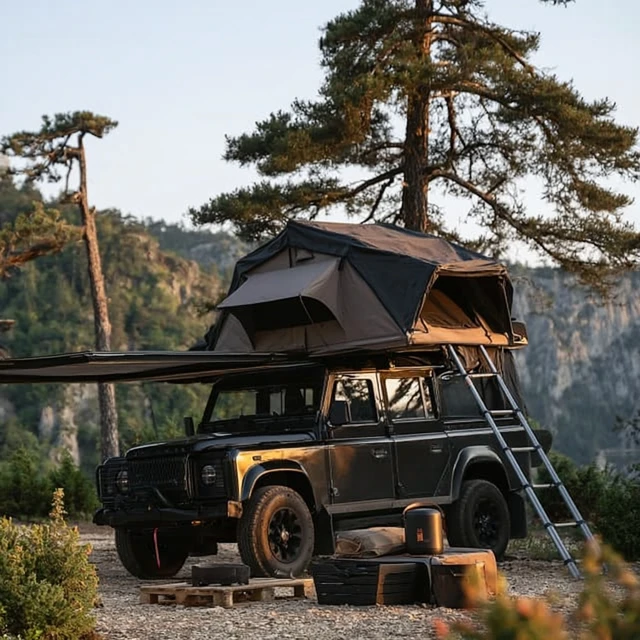
The first time I crawled into a rooftop tent, I was struck by how much space there actually is up there. A queen-sized mattress, room to sit up, and the sound of wind in the trees. But that space fills fast. Without a system, you end up digging through a pile of sleeping bags and headlamps while your partner waits outside in the cold. Rooftop tent camping organization is about making every inch work for you, so setup and takedown feel smooth, not frantic.

Start with the Folded Tent: Packing Before You Leave
Your rooftop tent spends most of its life folded. That’s where organization begins. Before you close the tent for travel, take a moment to stow items that will stay inside. I tuck my sleeping bag and pillow into the foot end of the tent. A thin foam mattress topper stays put between the folded mattress halves. This saves me from carrying extra duffels and keeps the tent ready to sleep in the moment it’s unzipped.
Common mistake: stuffing too much into the folded tent. The zipper and hinge points can strain. Stick to soft, lightweight items only. Hard objects like camp stoves or lanterns belong in the vehicle or on the roof rack.
The No-Rattle Packing Method for the Roof Rack
Rattles and clunks from the roof rack can ruin a drive. I use a simple trick: wrap every metal or hard plastic item in a microfiber cloth or a cut-up fleece blanket. Strap cooking pots inside a canvas bag with a towel between them. For gear bins, choose ones with rubber gaskets and locking lids. Then cinch them down with cam buckle straps, not ratchet straps—cam straps are quieter and easier to tighten by hand.
If you carry water, use collapsible containers that lie flat when empty. Fill them at camp, not before driving. This cuts weight and eliminates sloshing noise.
Weight Distribution for Stability
Rooftop tents already raise your vehicle’s center of gravity. Add gear on the roof rack, and you need to think about balance. Put the heaviest items—a cooler, a water jug, cast iron cookware—directly over the crossbars near the center of the roof. Lighter gear like chairs and clothing bags go toward the ends. This keeps the load stable on curves and reduces sway in crosswinds.
Safety note: Check your vehicle’s dynamic roof load rating before packing. Exceeding it can damage the roof or affect handling. A typical rating is 100–165 pounds for a moving vehicle.
Inside the Tent: Zones for Everything
Once the tent is open, I create three zones. The sleeping zone is at the head end: sleeping bag, pillow, and a small pouch for glasses and phone. The dressing zone is at the foot end: a folded change of clothes and a microfiber towel. The gear zone is along the side walls: mesh pockets or a hanging organiser for headlamps, a book, a water bottle, and a small first-aid kit.
For tents without built-in pockets, I attach adhesive hooks to the tent poles or use a lightweight hanging organiser that clips to the tent’s internal frame. This keeps small items off the mattress and within reach during the night.
Adapting for Rain and Wind
Rain changes everything. Keep a dry bag inside the tent with a rain jacket and a pair of camp shoes. When you climb in wet, you can change without soaking the sleeping bag. In wind, store loose gear in a zippered bag or a stuff sack with a drawstring—nothing should fly around if a gust hits the tent wall.
The Ladder and Entryway: Your Mudroom
The ladder is your entry point, so treat it like a mudroom. I hang a small mesh shoe bag from a ladder rung to hold my camp shoes, a headlamp, and the tent rainfly stakes. This way, I don’t have to crawl back into the tent for these items when I step out in the morning. A small rug or a doormat on the ground below the ladder catches dirt and keeps the tent floor cleaner.
Common mistake: leaving the ladder unsecured at night. Always check that it’s properly attached and stable before climbing up. In windy conditions, stake the ladder feet to the ground if possible.
Takedown Routine: Reverse the Order
Organization isn’t just about packing—it’s about unpacking efficiently next time. When I take down camp, I follow a simple rule: everything goes back in the same spot it came from. The sleeping bag goes to the foot of the folded tent. The gear bin goes on the roof rack in the same orientation. This consistency means I never have to guess where something is on the next trip.
Before folding the tent, I sweep out any dirt or pine needles with a small brush. I also air out the tent for a few minutes if it’s damp. This prevents mildew and keeps the tent fresh.
A Final, Quiet Touch
One last thing I do: I leave a small LED lantern inside the folded tent, turned off. When I arrive at a new campsite after dark, I unzip the tent, turn on the lantern, and have light immediately. No fumbling for batteries or phone flashlights. That little bit of planning makes the whole experience feel less like work and more like the escape it’s meant to be.
Takeaway: Rooftop tent camping organization comes down to three habits: pack soft items inside the folded tent, secure hard gear on the roof rack with no-rattle techniques, and create zones inside the tent so you always know where things are. Do this consistently, and every trip starts and ends with ease.
Frequently Asked Questions
How do I keep gear from rattling in my rooftop tent while driving?
Use soft-sided duffel bags instead of hard cases for items stored inside the tent. Wrap loose cookware in dish towels or place them in padded stuff sacks. For gear on the roof rack, use compression straps to cinch everything tight and add a rubber mat between the load and the rack to absorb vibration.
What is the best way to organize a rooftop tent for quick setup?
Store your sleeping bags and pillows inside the tent when it’s folded. Use a thin foam mattress topper that stays in place. Keep a small bag with tent-specific items—like the ladder, rainfly, and stakes—attached to the tent’s carry cover with a carabiner so you don’t search for them at dusk.
How should I distribute weight in a rooftop tent setup?
Place the heaviest items, like water jugs or cast iron cookware, directly over the vehicle’s roof rack crossbars near the center of the vehicle. Store lighter items, like clothing and sleeping pads, toward the ends of the tent platform. This keeps the center of gravity low and stable, especially on winding roads.