
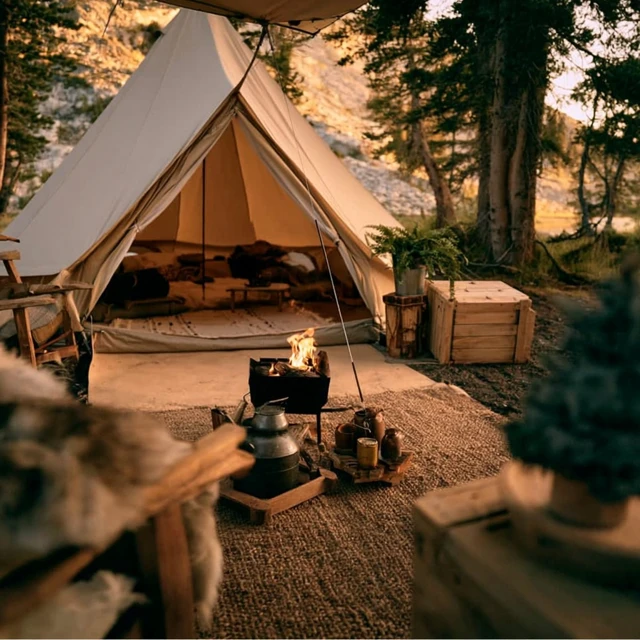
The first time I crawled into a tent after a long hike, I just threw my bag in the corner and hoped for the best. By morning, I was tangled in a sleeping bag, my headlamp buried somewhere under my clothes, and my water bottle had rolled into the dirt. That night taught me something: a tent living setup isn’t about luxury—it’s about making your small space work for you, not against you. Here’s how to set up your tent site for real comfort, whether you’re facing rain, wind, or just a restless night.

First, Choose Your Floor Plan
Before you even unroll your tent, walk the site. Look for a flat spot free of roots and rocks. If the ground slopes, orient your tent so your head is uphill—this keeps blood from pooling in your face and helps you sleep deeper. I always clear the area of twigs and pine cones; a small pebble under your hip can ruin a night’s rest.
Lay your footprint or ground tarp down first. A common mistake is using a tarp larger than your tent—rain will pool on the exposed edges and run under your floor. Trim it so it’s about two inches smaller than your tent on all sides. Once the tent is up, stake the corners first, then the vestibule. This sequence keeps the fabric taut and prevents flapping in breezy conditions.
Here’s a trick I haven’t seen elsewhere: after staking the corners, run a piece of reflective paracord from the top of each pole arch to a nearby tree or stake. This creates a low-tension ridge that stops the tent from sagging under heavy rain or snow. It takes two minutes and makes a huge difference in stability.
Zone Your Tent Like a Studio Apartment
Think of your tent in three zones: the sleeping zone, the gear zone, and the entry zone. The sleeping zone goes at the far end, away from the door. Your sleeping pad goes here, with your bag and pillow. Keep nothing else in this zone—no shoes, no food, no electronics. This keeps the sleeping area clean and dry.
The gear zone is near the foot of your sleeping pad or along one side wall. Use a small, soft-sided bin or a dry bag for clothes, and another for toiletries. I use a mesh bag for small items like my headlamp, knife, and lighter—hanging it from a loop on the tent ceiling keeps it off the floor and easy to find in the dark.
The entry zone is just inside the door. This is where you’ll sit to take off boots, and where wet gear lives temporarily. Lay a small doormat or a towel here to catch mud and moisture. If your tent has a vestibule, store your boots and rain jacket there, but always stake the vestibule out fully—a loose flap can let in water and bugs.
Weather Adaptations: Rain, Wind, and Heat
If rain is in the forecast, pitch your tent under a tree with a dense canopy, but not directly under a dead branch. Set up the rainfly with the door facing away from the prevailing wind. I always seam-seal the fly’s center seam before a trip; a small tube of sealer costs a few dollars and prevents that slow drip that finds your face at 3 a.m.
For wind, orient your tent’s narrow end into the wind. Use all guylines and stake them at a 45-degree angle away from the tent. If the ground is too hard for stakes, tie guylines to heavy rocks or logs. Never leave a tent unstaked in wind—it can collapse or tear.
In hot weather, set up in the shade by late afternoon. Open all vents and the door (if no bugs) for cross-breeze. Remove the rainfly if no rain is expected. A small battery-powered fan clipped to the tent ceiling can make a huge difference for airflow.
Gear Storage That Actually Works
Keep your tent floor clear of clutter. Use a hanging organiser with clear pockets for your phone, glasses, and map. Store food in a bear canister or odor-proof bag, and keep it outside the tent at least 100 feet from your sleeping area—this is critical for safety in bear country. Never cook inside the tent; carbon monoxide from stoves and heaters can be deadly in enclosed spaces.
For electronics, keep them in a dry bag with a small power bank. Charge during the day if you have solar, or bring extra batteries. A red light headlamp preserves night vision and doesn’t attract bugs as much as white light.
The One-Sided Zipper Trick
Here’s a specific technique that many campers overlook: when you zip your tent door closed, always start from the bottom and zip upward. This prevents the zipper from catching on the fabric near the top, where tension is highest. If you have a two-way zipper, close the bottom slider first, then the top. This keeps the door aligned and reduces wear. I’ve used this method for years and replaced fewer zippers than any camper I know.
Nighttime Routine for Better Sleep
Before bed, do a quick sweep of the tent floor for debris. Lay out your clothes for morning inside your sleeping bag so they’re warm. Place your headlamp and water bottle in the same spot every night—I keep mine in a small pouch clipped to the tent wall near my head. This routine takes two minutes and eliminates fumbling in the dark.
If you’re camping with kids, assign each child a small bin for their personal items. A clear bin makes it easy to find a favorite toy or book without digging through the whole tent. Keep a small trash bag pinned to the tent wall for wrappers and tissues.
A Final Note on Safety
Always check local weather and fire regulations before your trip. In high winds, consider sleeping in your car if the tent becomes unsafe. Never leave a campfire unattended, and douse it completely before bed. Store all food and scented items away from your tent to avoid attracting wildlife. A well-set-up tent is a sanctuary, but it’s only as safe as the habits you bring inside.
Take the time to practice your tent living setup at home before a trip. Crawl in, arrange your gear, and see what works. A few minutes of planning will save you hours of frustration on the trail. And when you wake up rested, dry, and ready for the day, you’ll know it was worth it.
Frequently Asked Questions
How do I keep my tent organized while camping?
Use a system of small bins or pouches for different categories: one for toiletries, one for electronics, one for cooking gear. Keep a dedicated spot for each item, and always return things after use. A hanging organiser near the tent door helps for daily essentials.
What should I put under my tent for comfort?
A good ground tarp slightly smaller than your tent footprint prevents water pooling. Inside, use a thick sleeping pad—closed-cell foam or inflatable—with an R-value suited to the season. For extra warmth, add a reflective blanket under the pad.
How do I set up my tent for windy conditions?
Stake the corners first, then the vestibule and guy lines. Position the narrow end of the tent into the wind. Use extra stakes at a 45-degree angle to the ground, and tie guylines to nearby trees or rocks if needed. Avoid setting up in open ridges.