
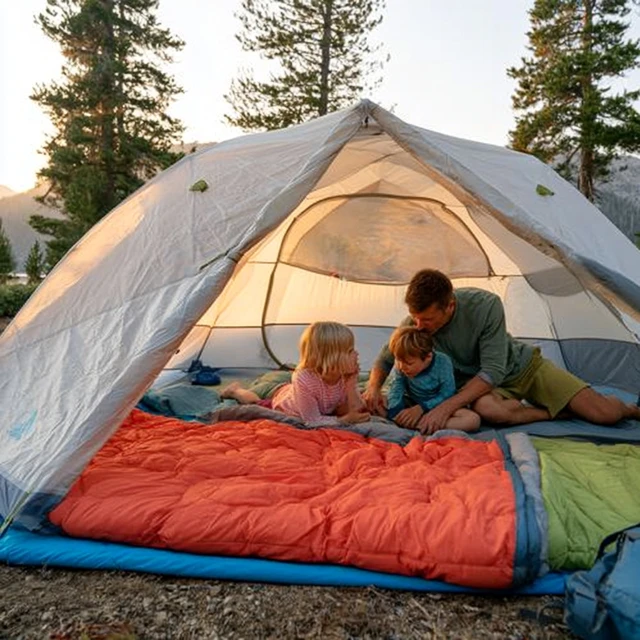
Rain patters on the fly. Somewhere inside the tent, a small flashlight clicks on and off, on and off. You hear the zip of a sleeping bag, then a whisper: I have to go. This is tent camping with kids. It’s not a vacation. It’s an adventure in problem-solving. But with the right setup sequence and a few non-obvious tricks, you can get through the night without losing your mind. Let me walk you through the method I’ve refined over many trips.

Choose the Right Tent Size and Pitch Spot
For two adults and two kids, a 6-person tent is the sweet spot. It gives room for three sleeping pads side by side plus a narrow aisle for gear. A 4-person tent for a family of three works if you use a footprint and keep the vestibule organized. The key is floor space—not headroom. You want each person to have a 20-inch-wide sleeping pad without touching the tent walls. Condensation collects on the fly, and wet walls mean wet sleeping bags.
When you arrive, walk the site before setting up. Look for a flat spot with no rocks or roots under the footprint. Avoid low ground where water pools after rain. I always pitch with the door facing away from the prevailing wind—that keeps the vestibule from acting like a sail. Stake the corners first, pulling the fabric taut. Then stake the vestibule and guylines. A well-pitched tent sheds wind and rain. A loose one flaps and leaks.
The Setup Sequence That Saves Time
Most people unpack everything, then set up the tent. That’s the mistake. Here’s the sequence I use:
- Lay the footprint and assemble the poles before opening the tent body. This keeps the inside clean.
- Feed poles through the sleeves or clips, then stake the corners. Do not skip guylines—they stabilize the tent in gusts.
- Once the tent is upright, lay all sleeping pads inside before inflating. This prevents dirt from getting on the floor. Inflate pads one at a time, starting with the smallest child’s pad in the corner farthest from the door.
- Unroll sleeping bags on top of the pads. Zip them open to air out—they’ll be less sweaty at bedtime.
- Set up the vestibule storage: a clear plastic bin for each child’s clothes and snacks, plus a small trash bag clipped to the tent loop.
This sequence takes 15 minutes. The alternative—unpacking everything, then searching for the pole bag—takes 30 and leaves you frustrated.
Manage the Chaos: Zones Inside the Tent
A tent with kids can feel like a laundry basket. The trick is to create three zones: sleep, storage, and transition. The sleep zone is the far end of the tent. No food, no shoes, no toys. The storage zone is the middle—use a mesh pocket organizer hung from the ceiling for headlamps, glasses, and a small first-aid kit. The transition zone is the vestibule. Keep a small mat there for wiping feet, and a dedicated bin for shoes that never enter the sleeping area.
I also use a dirty clothes bag—a mesh drawstring sack—hung from a hook near the door. Kids strip off wet socks and muddy pants and toss them in. It keeps the floor clear and the smell manageable. One less thing to trip over at 2 AM.
Sleep Systems That Actually Work
Kids lose heat faster than adults. Their sleeping bags need a higher R-value pad underneath. For a 40°F night, I use a pad with R-value 4.5 for each child. If the forecast says 30°F, I add a closed-cell foam pad under the inflatable one. That double layer traps more air and blocks ground cold.
Sleeping bags rated for 20°F are a good baseline. But here’s the non-obvious trick: use a fleece liner inside a 20°F bag. It adds warmth without bulk, and it’s easy to wash. Kids sweat, and a damp bag loses insulation. The liner stays dry longer. On cold nights, I tuck a hot water bottle (in a sock) at the foot of each child’s bag. They fall asleep faster, and the warmth lasts until morning.
For the tent interior, I use a small battery-operated fan if it’s warm, or a red-light lantern for night trips to the bathroom. Red light preserves night vision and doesn’t wake everyone up.
Safety Notes That Matter
Never use a camp stove, propane heater, or lantern inside a tent. Carbon monoxide is odorless and deadly. Only use battery-operated lights. If you need warmth, use a properly rated sleeping bag and pad, not a heater.
Store all food and scented items (toothpaste, sunscreen) in a bear-proof container or a car trunk at least 100 feet from the tent. Raccoons and bears follow smell. A single granola bar wrapper in a tent pocket can attract unwanted visitors. Check local regulations for food storage requirements.
If wind picks up, re-stake the guylines. A tent that flaps in the wind can snap a pole. Lower the fly to reduce wind resistance. If lightning is within 10 miles, pack up and head to a hard-sided vehicle or building. A tent offers no protection from lightning.
The Morning Routine: Packing Up Without Tears
Packing a wet tent with kids is the hardest part. The trick: air out the tent before you take it down. If the sun is out, unzip the fly and let the tent dry for 20 minutes. Then remove the fly, shake it, and fold it separately from the tent body. This prevents mildew. If the tent is still damp, pack it in a separate bag and dry it at home within 24 hours.
Have each child pack their own sleeping bag into a stuff sack. Let them do it—it’s a skill they learn. You can always re-roll it later. Use a checklist: tent body, fly, poles, stakes, footprint, sleeping pads, bags, and the repair kit (a small tube of seam sealer and a pole splint). I keep a dedicated camping bin with all non-perishable gear so I don’t have to re-pack every trip.
One Final Trick
Here’s the tip you won’t find on ten other sites: use a small, dark-colored towel as a doormat inside the vestibule. Kids’ feet are always dirty. That towel catches grit and moisture. At night, shake it out and hang it on a clothesline to dry. In the morning, it’s clean and ready. It’s a tiny thing, but it keeps the tent floor from turning into a sandbox.
Tent camping with kids is not about perfection. It’s about having a system that handles the mess. Pitch the tent right, zone the space, and layer the sleep system. The rest is just storytelling around a campfire.
Frequently Asked Questions
What is the best tent size for camping with kids?
For a family of four, a 6-person tent gives enough floor space for cots or sleeping pads plus gear. Go one size larger than the number of people to avoid feeling cramped. A 4-person tent for two adults and one child can work if you use a footprint and organize well.
How do I keep kids warm in a tent at night?
Layer their sleep system: a thick sleeping pad (R-value 4.5 or higher) under a 20°F-rated sleeping bag, plus a fleece liner if it dips below freezing. Have them wear a base layer and a hat. Avoid cotton pajamas—they lose insulation when damp. A hot water bottle in a sock at the foot of the bag helps.
What should I do if my child is scared of the dark in a tent?
Bring a red-light headlamp or a battery-operated candle lantern—red light preserves night vision but feels cozy. Let them keep a small flashlight in their sleeping bag. Pitch the tent in a spot where you can leave the fly partly unzipped for starlight. Practice a ‘campout’ in the backyard first.
How do I prevent kids from tracking dirt into the tent?
Set up a ‘shoe station’ just outside the door—a small mat or a plastic bin. Have everyone remove shoes before entering. Use a large, dark-colored towel inside the vestibule for wiping feet. I also keep a dedicated pair of ‘camp shoes’ for each child that never go past the tent door.
What is the biggest mistake when tent camping with kids?
Overpacking. It’s tempting to bring every toy and comfort item, but a cluttered tent creates tripping hazards and stress. Instead, pack one small bin of quiet activities per child (coloring book, card game, binoculars). Focus on layers, rain gear, and a solid sleep system—those make or break the trip.